

Choosing the best puppy food early sets the tone for healthy growth, steady energy, and easier training. If you’re building a practical puppy feeding schedule, start with a diet that supports growth and is easy to portion consistently—because the wrong choice can lead to tummy upsets, fussy eating, or uneven weight gain.
This guide breaks down what to look for in a puppy diet from day one, with simple feeding steps you can follow straight away.
Puppy nutrition basics: what “complete” really means
Puppies need higher energy, more protein, and carefully balanced minerals than adult dogs. Their bones, muscles, immune system and brain develop quickly, so nutrition gaps tend to show up fast.
Start by choosing a food labelled as complete and balanced for growth (or “all life stages” if it explicitly supports growth). Responsible brands will also reference recognised feeding standards for growth (often listed in the product details), which helps confirm the diet is formulated to meet established nutrient profiles rather than simply being tasty.
- Protein quality matters: look for named animal proteins (such as chicken, lamb or fish) high on the ingredient list.
- Fat fuels growth: puppies rely on fat for energy and coat condition; very low-fat foods can leave them hungry and underpowered.
- Calcium and phosphorus balance: important for all puppies, and especially for larger breeds, where excesses can contribute to uneven growth.
- Digestibility: highly digestible diets often mean smaller stools, less gas, and more consistent energy.
How to choose the right food for your puppy
The “best” option is the one that suits your puppy’s life stage, expected adult size, and digestion—while being easy for you to feed consistently. When people search for the best puppy food, they often get pulled into trends; instead, lock in a few non-negotiables and keep the plan simple.
- Match food to expected adult size: small-breed puppies often do well on energy-dense kibble pieces they can chew. For large and giant breed puppies, choose a large-breed puppy formula designed to help manage energy intake and mineral balance for controlled growth.
- Pick a format you can stick with: dry, wet, or a mix can all work. Consistency matters more than perfection, particularly during the first months.
- Check the feeding directions: reputable puppy foods provide clear daily amounts by weight and age—use it as a starting point, then adjust based on body condition.
- Watch the poo: firm, easy-to-pick-up stools are a strong sign you’ve found a suitable puppy diet.
If you’re stocking up for a new arrival, it helps to set up the basics in one go—bowls, treats, chews, training aids and grooming gear. You can find the essentials in our puppy supplies range.
Quick tip: When comparing foods, don’t judge by the first day. Give any new puppy food at least 10–14 days (with a gradual transition) before deciding it “doesn’t agree” with them.
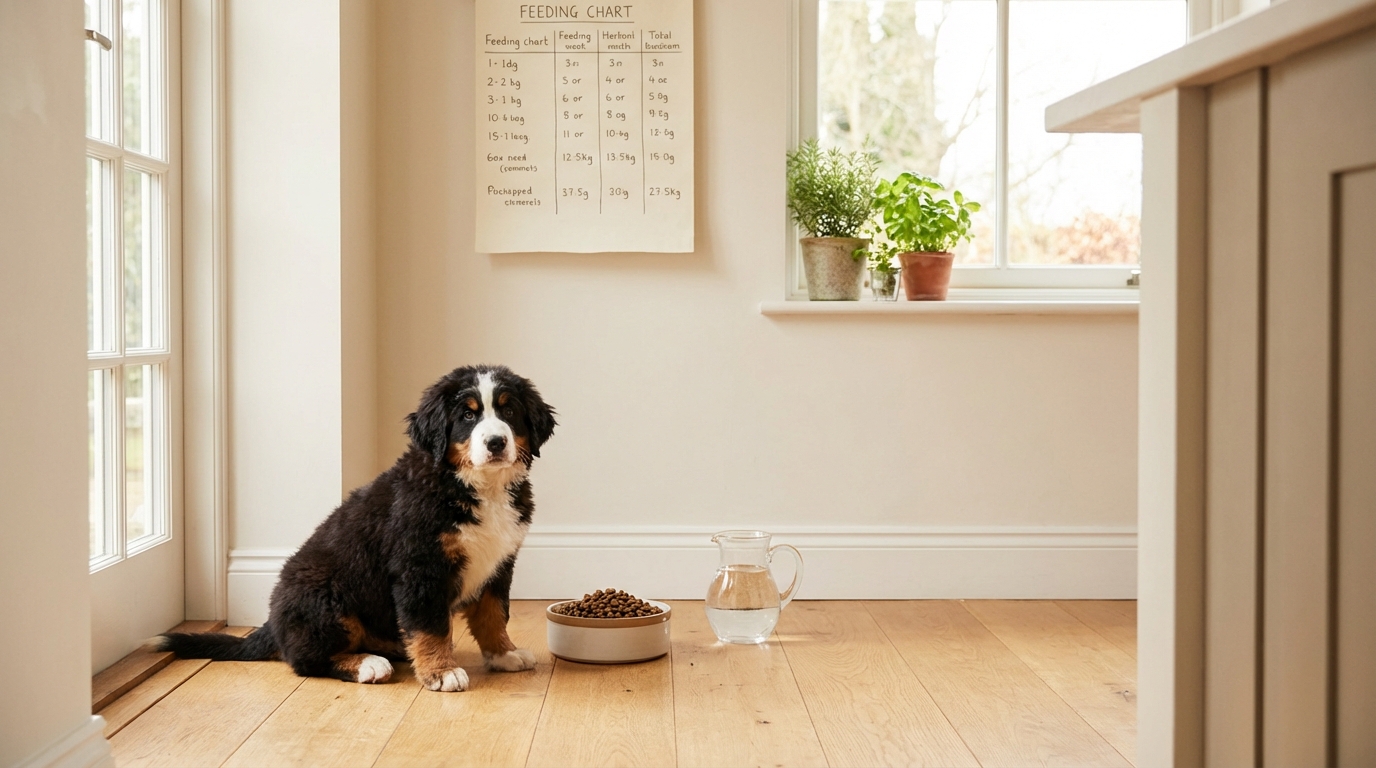
A simple feeding plan by age and size
A clear puppy feeding schedule helps digestion, reduces fussiness, and makes training routines easier. Your goal is steady growth and a lean, athletic body shape—not rapid weight gain.
- 8–12 weeks: 4 small meals per day. Puppies have tiny stomachs and big energy needs, so smaller, more frequent meals can reduce tummy upsets.
- 3–6 months: 3 meals per day. Appetite often increases; monitor body condition rather than automatically increasing portions.
- 6–12 months: 2 meals per day for most puppies. Giant breeds may stay on puppy food longer than small breeds.
Start with the pack’s daily amount, then split it across meals. Keep feeding predictable: similar times each day, a calm environment, and pick up the bowl after 15–20 minutes. This routine supports training and makes it easier to spot appetite changes early.
Portion control and body condition: how to adjust amounts safely
Feeding guides are useful, but they’re not personalised. Growth spurts, activity levels, and even seasonal changes in exercise can shift what your puppy needs. The simplest way to stay on track is to measure consistently and adjust gradually.
- Measure accurately: kitchen scales are the most consistent. If you use a scoop, use the same one every time and level it off.
- Make small changes: if your puppy is leaving food behind most days, reduce the daily amount slightly. If they’re staying too lean or acting genuinely hungry between meals, increase a little. Avoid big jumps that can trigger loose stools.
- Use a body condition check weekly: you should be able to feel ribs under a light layer of flesh without pressing hard, and see a waist from above. If the waist disappears or ribs become hard to feel, it’s time to adjust portions.
- Track progress simply: weekly weigh-ins (or progress photos from above and side) can highlight slow changes before they become a problem.
Large-breed puppies benefit from staying lean; carrying extra weight during growth can place more stress on developing joints. If you’re uncertain about ideal condition or growth rate, check in with your vet for personalised guidance.
Switching foods and avoiding common feeding mistakes
Most “food problems” are really transition problems. Puppies are sensitive to sudden changes, stress, and rich extras layered on top of a complete diet.
- Switch gradually: mix the new food into the old over 7–10 days, increasing the new portion every couple of days.
- Don’t overdo treats: keep treats to a small portion of daily intake so the main food still provides balanced nutrients.
- Avoid constant flavour swapping: frequently changing foods can create fussiness and make it harder to identify what suits their digestion.
- Measure portions: use kitchen scales or a dedicated scoop; “eyeballing” commonly leads to overfeeding.
If you use kibble for training, reserve part of the daily food allowance and use it as rewards. This keeps growth steady while still reinforcing good behaviour.
New puppy at home? Make mealtimes smoother with the right setup from our puppy supplies collection, including bowls, feeders and training essentials.
Treats, toppers, water and supplements: what’s worth it?
Most healthy puppies thrive on a quality, complete puppy food without extras. Add-ons can be helpful in specific situations—like encouraging a nervous eater—but they should not crowd out the balanced diet your puppy relies on for growth.
- Water: fresh water should always be available. If stools are dry or your puppy seems less energetic, check water access and bowl location.
- Treats: choose simple options and keep pieces tiny. For teething, a suitable chew can satisfy the urge to bite without adding lots of calories.
- Toppers: if using a topper, keep it consistent and minimal. Too many rich toppers can trigger soft stools and encourage picky habits.
- Supplements: only consider them when there’s a clear reason and professional advice. With a balanced puppy diet, adding extras “just in case” can unbalance key nutrients.
Once you’ve found a food that suits your dog, the simplest approach usually wins: consistent meals, measured portions, and slow changes when you need to adjust.
Frequently Asked Questions
How do I know if my puppy’s food is working?
Look for steady growth, a lean body shape, bright eyes, a glossy coat, and firm stools. Your puppy should have good energy between naps without seeming wired or constantly hungry.
Should I feed wet, dry, or a mix?
Any can work if it’s complete for growth and agrees with your puppy’s digestion. Dry food is convenient for measuring and training, while wet food can increase palatability for picky eaters—just keep the total daily amount consistent.
When should I switch from puppy food to adult food?
It depends on expected adult size and growth rate. Small breeds often mature sooner, while large and giant breeds may need puppy nutrition for longer. Switch gradually and aim for stable body condition rather than a set date.
Ready to set your pup up for success? Stock up on mealtime and training essentials in our puppy supplies range, and if you’re unsure what’s ideal for your dog’s growth, chat to your vet.