

Good senior cat health is built on noticing small changes early and keeping routine checks simple and consistent. As cats age, issues can develop quietly, so a few at-home observations can make old cat care much less stressful. Below are practical ageing cat health checks you can work into everyday life.
Start with a baseline: what’s normal for your cat
The most useful ageing cat health checks begin with a clear picture of “normal”. If you know your cat’s usual eating rhythm, play style, sleeping habits and grooming, it’s easier to spot subtle shifts. Those shifts are often the first clue that something needs attention.
Create a simple monthly note (in your phone is fine) covering: body weight (if you can weigh safely), appetite, water intake, litter tray output, and energy levels. Add a quick line on mood: more clingy, hiding, or unusually vocal. Patterns matter more than one odd day.
During calm moments, do a gentle hands-on scan. Run your hands from head to tail, feeling for new lumps, scabs, tenderness, or areas your cat avoids being touched. Check both sides so you can compare.
Weight, appetite, thirst and litter tray changes
In senior cat health, weight changes are a big signal—especially when they happen without you changing food. Weight loss can be easy to miss under fur, so look for a more prominent spine, hips, or shoulder blades. Weight gain can also creep up as activity drops.
Appetite changes deserve attention too. Eating less, eating more, or becoming picky can all point to discomfort, dental trouble, nausea, or metabolic changes. Watch the bowl and note whether your cat eats slowly, drops kibble, or returns repeatedly for small bites.
- Drinking more: A noticeable increase in water intake may pair with larger urine clumps.
- Urinating changes: Straining, frequent visits, accidents, or crying in the tray are urgent warning signs.
- Stool changes: Constipation, diarrhoea, or going outside the tray may indicate pain or stress.
To make monitoring easier, use a clumping litter that shows urine volume clearly and scoop daily. If you have multiple cats, occasional “bathroom breaks” in separate rooms can help you identify who is doing what.
Teeth, gums and breath: the mouth matters
Dental disease is common in old cat care and can affect appetite, behaviour, and overall comfort. You don’t need to pry the mouth open widely—just lift the lip gently when your cat is relaxed. Look for red gums, visible tartar, drooling, or a preference for one side of the mouth.
Bad breath isn’t just unpleasant; it can be a clue that bacteria and inflammation are present. Also watch for pawing at the mouth, head shaking, or crunching reluctance. Some cats keep eating despite pain, so behaviour clues are important.
- Home check: Inspect gums for redness and swelling; note any bleeding on toys or bowls.
- Eating behaviour: Dropping food, chewing slowly, or favouring softer foods may signal soreness.
- Face changes: Swelling under the eye or along the jaw needs prompt attention.
Quick tip: Take one clear photo of your cat’s teeth and gums every month (same lighting if possible). It’s an easy way to spot gradual changes you might otherwise miss.
Coat, skin, claws and parasite protection
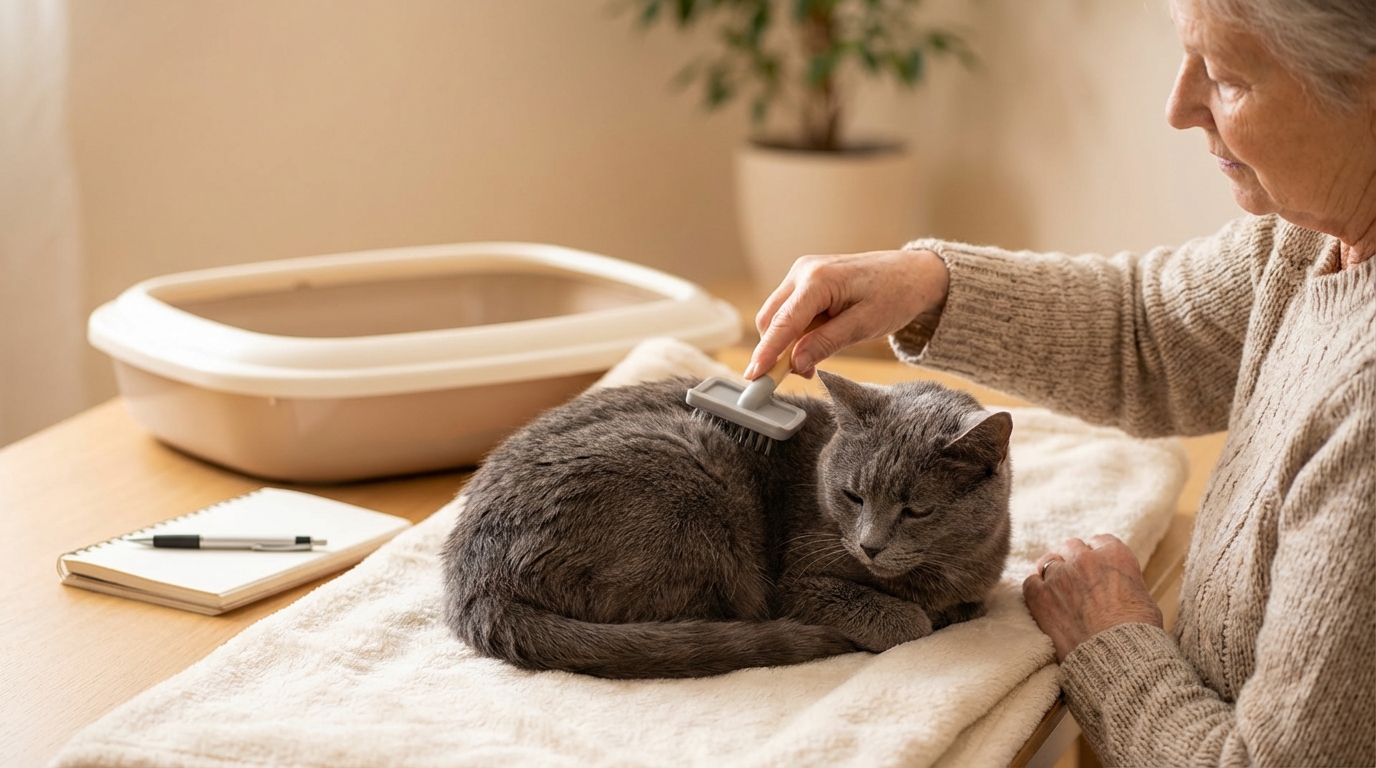
A healthy coat often reflects healthy routines. Older cats may groom less due to stiffness or dental discomfort, so you might see greasier fur, dandruff, matting, or a “spiky” look along the back. Regular brushing supports skin health and helps you find lumps, fleas, or scabs early.
Check the skin for redness, flaking, or thickened patches. Pay attention to the base of the tail, around the neck, and along the belly—common areas for itchiness. If your cat is overgrooming, you may notice thinning fur or broken hairs.
Claws can also become an issue with age. Indoor cats may not wear them down, leading to overgrowth or snagging. Look for claws curling towards pads and trim carefully if your cat tolerates it, using calm, short sessions.
Parasite prevention remains a key part of senior cat health. Ageing cats can have more sensitive skin and may cope less well with itchiness or secondary infections from scratching. Keep protection consistent and choose veterinary-grade options suited to your cat’s life stage; you’ll find helpful options in our flea and tick prevention range and ongoing support in our heartworm prevention category.
Mobility, behaviour and comfort at home
Mobility changes can be subtle: jumping down more cautiously, hesitating before stairs, or choosing lower sleeping spots. Some cats simply stop doing favourite activities rather than showing obvious limping. These are important ageing cat health checks because discomfort often presents as “slowing down”.
Behaviour changes matter just as much. A normally social cat may hide, become irritable when touched, or vocalise at unusual times. Litter tray avoidance can also be linked to pain—high-sided trays, slippery floors, or a long walk to the tray can make a previously easy routine feel difficult.
- Simple home adjustments: Add a low-entry tray, a step to favourite chairs, and non-slip mats on key routes.
- Warmth and rest: Provide a supportive bed in a quiet, draught-free spot.
- Play style: Swap high jumps for gentle wand play and short, frequent sessions.
Keep an eye on breathing at rest (should be quiet and effortless), eye clarity (cloudiness or discharge), and hearing or vision changes (startle reactions, bumping into objects). These observations help you respond early and keep old cat care focused on comfort and quality of life.
Frequently Asked Questions
How often should I do at-home checks for an older cat?
A quick weekly scan (coat, body condition, appetite, litter tray) works well for most households. Add a more thorough monthly note with weight, photos, and any behaviour changes to track trends over time.
What are the easiest warning signs to miss in senior cat health?
Gradual weight loss, subtle drinking changes, and reduced jumping are commonly overlooked because they develop slowly. Small behaviour shifts—hiding more, grooming less, or being touch-sensitive—can also be early indicators of discomfort.
Do senior cats still need parasite prevention if they stay indoors?
Yes, many parasites can still be introduced through people, other pets, or contact with contaminated environments. Consistent, veterinary-grade prevention helps reduce itching, skin irritation, and disease risks as your cat ages.
Ready to support your cat’s next life stage? Stock up on reliable, veterinary-grade protection in our flea and tick prevention and heartworm prevention categories, and chat to your vet if you notice sudden changes or ongoing discomfort.