

The russian blue cat is famous for its plush, shimmering coat and quietly devoted nature. If you’re considering adding one to your home, understanding their personality and day-to-day needs helps you choose the right supplies and routine from the start.
This breed profile covers what to expect from a Russian Blue’s temperament, grooming, diet, enrichment, and preventative care.
Breed overview: looks, size, and history
Russian Blues are instantly recognisable for their short, dense “double coat” that stands away from the body and can look silver-tipped under light. Their eyes are typically vivid green, and their build is refined rather than bulky, with long legs and a graceful posture.
They’re generally medium in size and often feel heavier than they look thanks to solid muscle. Many owners also notice a tidy, “polished” appearance that makes the breed look well-groomed even between brushing sessions.
While the exact origins are debated, the Russian Blue is widely associated with northern seaports and a history of being valued for its coat and calm companionship. Today, they’re popular with people who want an affectionate cat that isn’t constantly underfoot.
Temperament and personality at home
The Russian Blue temperament is best described as loyal, observant, and gently playful. Many form a strong bond with one or two favourite people, following them from room to room while keeping a polite distance from guests at first.
This breed often prefers predictable routines. Mealtimes, play sessions, and quiet rest can become part of a comforting pattern, and disruptions may lead to temporary shyness rather than aggression.
They’re usually not overly vocal, but they communicate with soft sounds and body language. If your Russian Blue begins hiding more than usual, losing interest in play, or avoiding touch, it’s a sign to check their environment and wellbeing.
- With children: Often patient with calm handling; supervise and teach gentle interaction.
- With other pets: Many do well with slow introductions and clear “escape routes” like cat trees.
- Independence: Content alone for reasonable periods, but benefits from daily engagement.
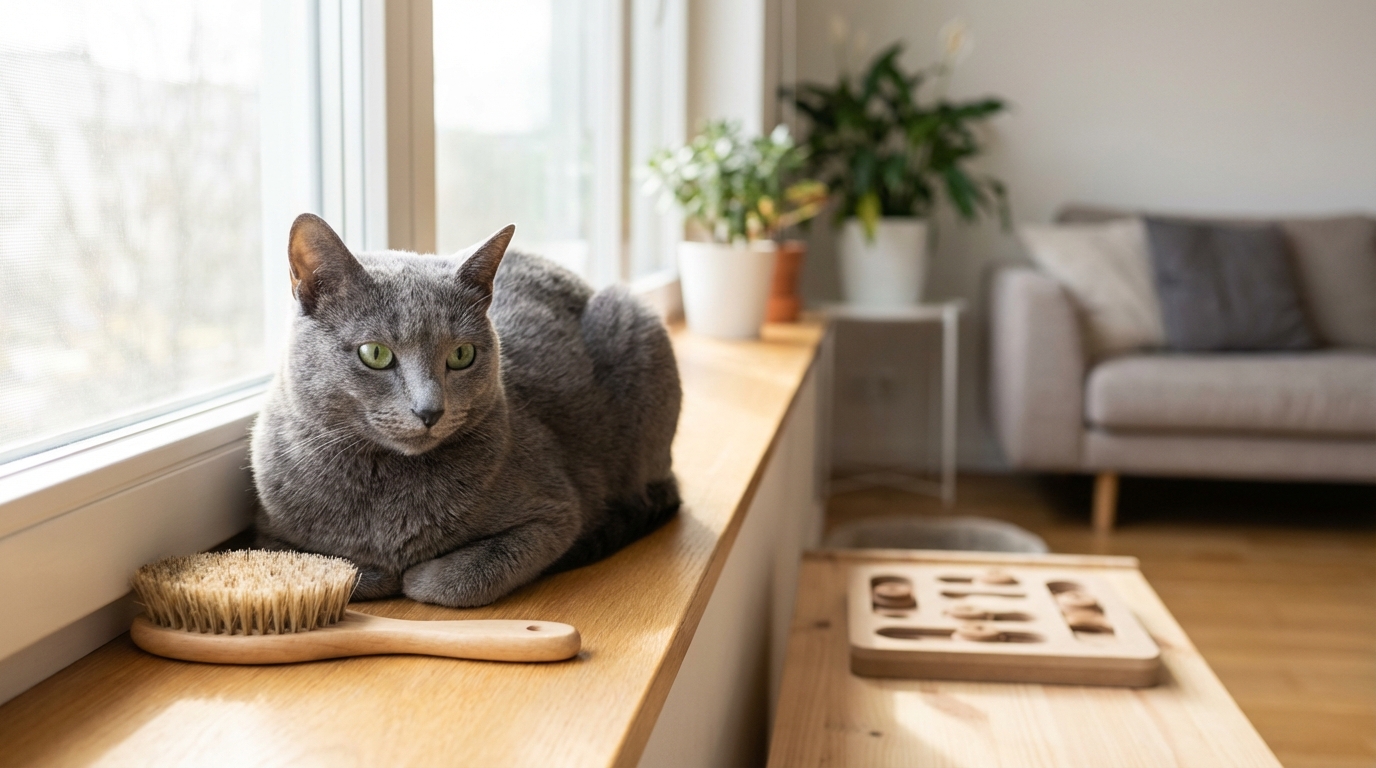
Daily care: grooming, feeding, and enrichment
A practical Russian Blue care guide starts with simple consistency: quality food, regular grooming, and daily play. Their coat is low-shedding compared with some breeds, but it still benefits from weekly brushing to remove loose hair and keep skin oils evenly distributed.
Feeding should focus on complete, balanced nutrition appropriate to your cat’s life stage. Russian Blues can be enthusiastic eaters, so measuring portions and using puzzle feeders can help prevent unnecessary weight gain.
Enrichment matters because this breed is intelligent and can become bored if left without outlets. Short bursts of interactive play often work better than one long session.
Quick tip: Rotate toys every few days instead of leaving everything out—novelty keeps a Russian Blue engaged without needing more clutter.
Don’t forget the basics: fresh water, a clean litter tray in a quiet spot, and a few cosy resting areas. Many Russian Blues love high perches, so a sturdy cat tree or wall shelves can reduce stress and encourage healthy movement.
For everyday essentials and seasonal restocks, browse our cat flea and tick options and ongoing cat heartworm prevention to keep your routine straightforward.
Health and preventative care
Russian Blue health is generally robust, but like any breed, they do best with preventative habits rather than reactive fixes. Weight management is a common theme: a calm indoor lifestyle plus a strong appetite can lead to gradual gain if portions and activity aren’t monitored.
Dental care is another often-overlooked area. Dental-friendly diets, appropriate chews, and at-home tooth brushing (introduced slowly and positively) can support gum health and reduce future problems.
Preventative parasite control is a core part of long-term wellbeing. Fleas and ticks can cause irritation and skin issues, while internal parasites can impact comfort and condition. A simple schedule—supported by products that fit your cat’s size and life stage—helps you stay ahead of problems.
- Coat and skin: Regular brushing helps you spot dry patches, dandruff, or overgrooming early.
- Body condition: Aim for a visible waist and easy-to-feel ribs without excess padding.
- Behaviour changes: Reduced play, appetite changes, or hiding can be early warning signs.
If you’re shopping for preventatives, choose options designed for cats and follow label directions carefully. If you have a kitten, confirm age and weight suitability before starting a new product.
Is this breed right for you?
The russian blue cat suits homes that value calm companionship and predictable routines. They’re often ideal for people who want affection without constant noise, and for households that can provide daily play and a peaceful resting space.
Choose this breed if you enjoy building trust gradually. A Russian Blue may take time to warm up, but many become deeply attached, greeting their person at the door and settling nearby during quiet moments.
If you want a cat that thrives on constant novelty or is instantly social with everyone, you may prefer a more outgoing breed. However, with gentle introductions and consistent care, Russian Blues often flourish into confident, affectionate companions.
Frequently Asked Questions
Do Russian Blues shed much?
They have a dense coat, but many owners find shedding manageable with weekly brushing. Regular grooming also reduces hair around the home and helps prevent hairballs.
What is a typical Russian Blue temperament like with visitors?
Many are polite but reserved at first, preferring to observe from a distance. With time and calm handling, they often become comfortable and may approach for attention on their own terms.
Are Russian Blues high maintenance?
They’re usually moderate to low maintenance: simple grooming, consistent feeding, and daily play go a long way. The most important “maintenance” is routine—this breed tends to do best when life is predictable.
Ready to set up a simple preventative routine? Stock up on trusted options in our cat flea and tick and cat heartworm prevention ranges, and chat to your vet if you’re unsure what best fits your cat’s age and lifestyle.